Hurricanes Around The World
There are seven different basins in which hurricanes typically occur. The most active basins are the northern Atlantic Ocean, the eastern and western portions of the northern Pacific Ocean, and the Indian Ocean. While the general term for a hurricane is “tropical cyclone,” the different basins have different names for these storms. In the northern Atlantic Ocean and the eastern Pacific Ocean, these storms are referred to as hurricanes. In the western Pacific Ocean, these storms are referred to as typhoons, and in the Indian Ocean, they are simply referred to as tropical cyclones.

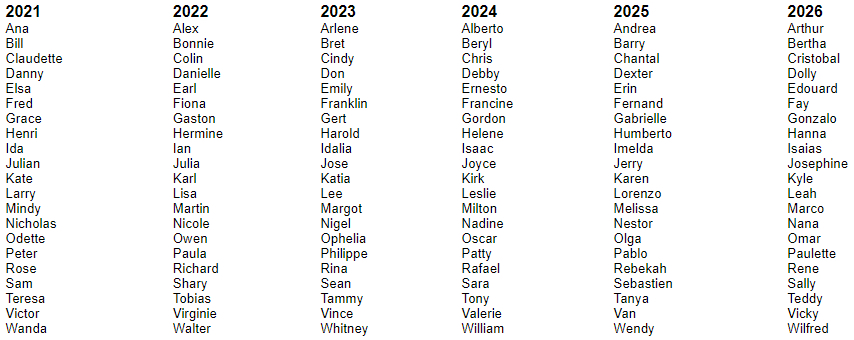
Individual hurricanes are given unique names used to identify them quickly in weather discussions. These names are set years in advance by the World Meteorological Organization working with the individual meteorological services of the nations which are forecasting the hurricanes. In the Atlantic basin, tropical cyclones are given a unique name when their windspeeds exceed 39 miles per hour, at which point they are classified as a tropical storm. Weather forecasting organizations in other basins may decide to name individual tropical cyclones at different intensities.
The list of names for each hurricane season in the Atlantic basin includes 21 names, each starting with a different letter of the alphabet. The list skips letters which are rare for names to begin with, such as Q, X, and Z. There is a separate list of names for the eastern Pacific basin, which does include names beginning with X and Z. When a particularly impactful tropical cyclone occurs, its unique name will often be retired so that no future tropical cyclones will ever use that name. For example, after the devastating Category 5 Hurricane Andrew made landfall in 1992, the name Andrew was retired for the Atlantic basin and no other hurricanes will be given that name in the future. If a very active hurricane season uses up all of the 21 in the Atlantic basin, then the National Hurricane Center will use an alternate list of names approved by the World Meteorological Organization for naming additional storms. Prior to 2021, the additional storms would be given names according to the Greek alphabet, but this plan was abandoned after the very active 2020 hurricane season because the names were not unique and it might be confusing for the general public.