
What are the Types of Severe Weather that Thunderstorms Can Cause?
The three main types of severe weather are damaging straight-line winds, large hail, and tornadoes. One, two, or all three of these can occur in the strongest thunderstorms.
Straight-Line Winds
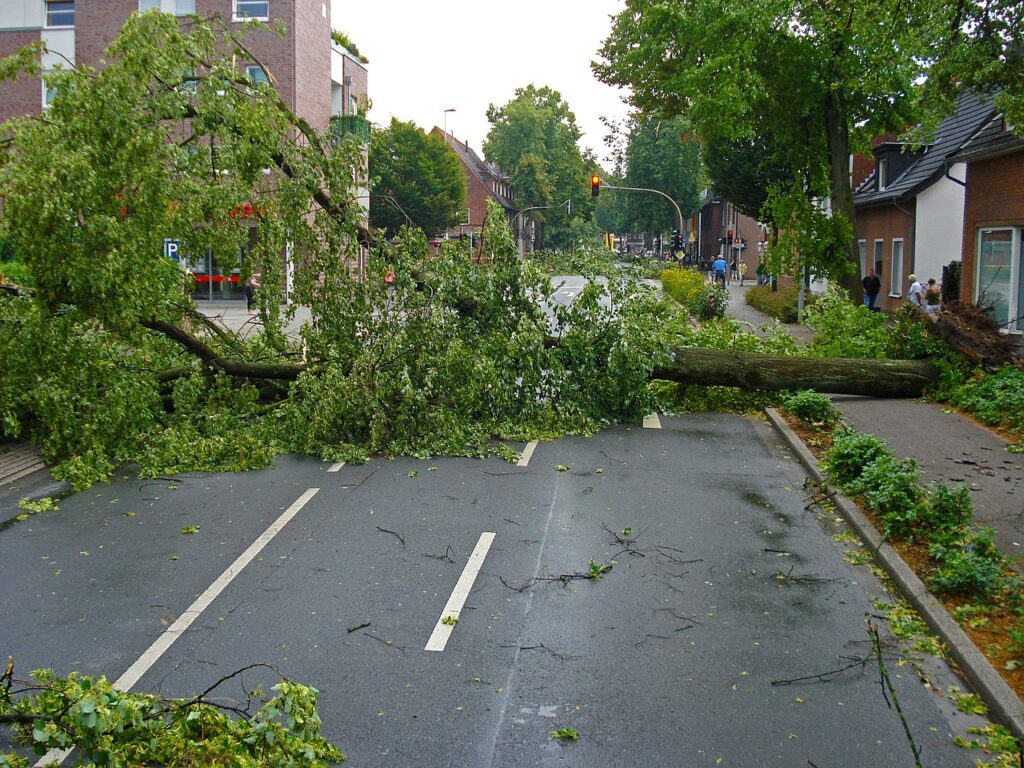
Straight-line winds are winds that move in one direction and can cause damage if they are over 60 miles per hour. A Severe Thunderstorm Warning, issued by the National Weather Service, would try to warn people of winds in excess of 60 mph because they can cause damage. Even if a thunderstorm itself is rotating, it can still cause straight-line winds along a gust front or leading edge or associated with a downburst or microburst.
Large Hail
Hail larger than one inch in diameter can cause property damage or injuries to people and livestock. Even though smaller hail can still cause damage such as crop damage, Severe Thunderstorm Warnings are usually issued when hail is expected to be one inch or larger. Hail forms where liquid water and ice are mixing near the freezing level in thunderstorms. The stronger the updraft, the heavier the hail can get before it falls out of the cloud. Therefore, stronger thunderstorms with stronger updrafts produce larger hail. The largest hailstones in the world occur in the United States and South America, and they have diameters of about 8 inches.

Tornadoes
Tornadoes are violently rotating columns of air that stretch from the base of a cloud to the ground. Most destructive tornadoes form within rotating thunderstorms called supercells. Supercells can also produce large hail and damaging straight-line winds. It may be difficult to see a tornado stretching all the way to the ground, but that does not mean a tornado is not occurring.