
What Patterns Cause Fire Weather?
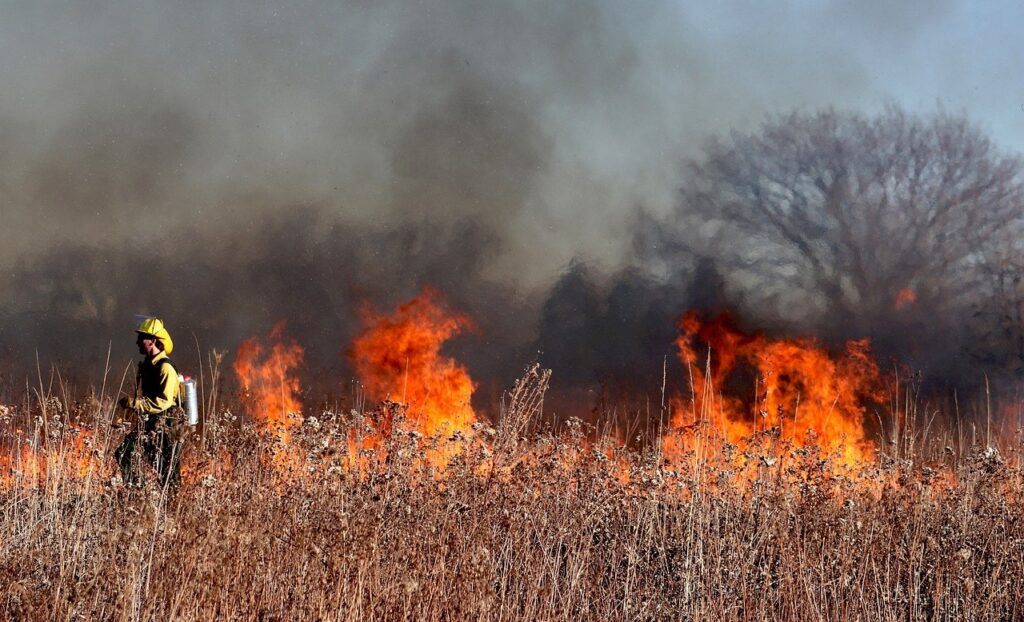
Fire weather refers to the atmospheric conditions which wildfires more likely to occur and become stronger. This is most relevant to the central and western United States, where wildfires pose a significant threat to life and property. The basic ingredients for fire weather are dry air and strong winds. These conditions can occur throughout the year in the central and western United States. However, when there is a lot of precipitation making the ground more wet, fire weather is less likely to occur. One other consideration for forecasting fire weather is the availability for fuels, meaning how much brush and grass can be burned if a wildfire were to form. Even if it is very dry and windy, if there is nothing to burn, the wildfire will not occur.
One of the most famous patterns that often leads to fire weather is called the Santa Ana winds. These are winds which can happen in southern California, where extremely dry winds come down off the mountains towards the coast. The name comes from the location where they form, which often occur around the city of Santa Ana (in the Los Angeles metro). These winds usually occur when there is a strong surface high pressure maximum over Nevada. Winds circulating around the high pressure flow clockwise, which would promote winds flowing from east to west in southern California. As those winds are pushed up and over the Sierra Nevada mountains, the moisture condenses out, and the winds become extremely dry. Santa Ana winds are one of the reasons southern California has to deal with fire weather conditions.