What Watches and Warnings Mean For You
Every watch, warning, or advisory issued by an NWS office will include call-to-action statements about what to do to keep yourself safe. For example, if a tornado warning is issued, there will be a statement in the warning saying to get inside a sturdy building and to stay away from windows and doors. If a flood warning is issued, there will be a statement in the warning saying to seek higher ground.
Sometimes when a weather situation is particularly life-threatening, the NWS will issue what is known as a “PDS” (Particularly Dangerous Situation) watch or warning. PDS watches and warnings are reserved for the most extreme weather events such as a confirmed tornado moving towards a city, or widespread flash flooding forcing people to flee from entire neighborhoods.
The National Weather Service is responsible for issuing watches, warnings, and advisories for many different types of events ranging from rip currents along the shore to severe thunderstorms and tornadoes to blizzards to air quality alerts.
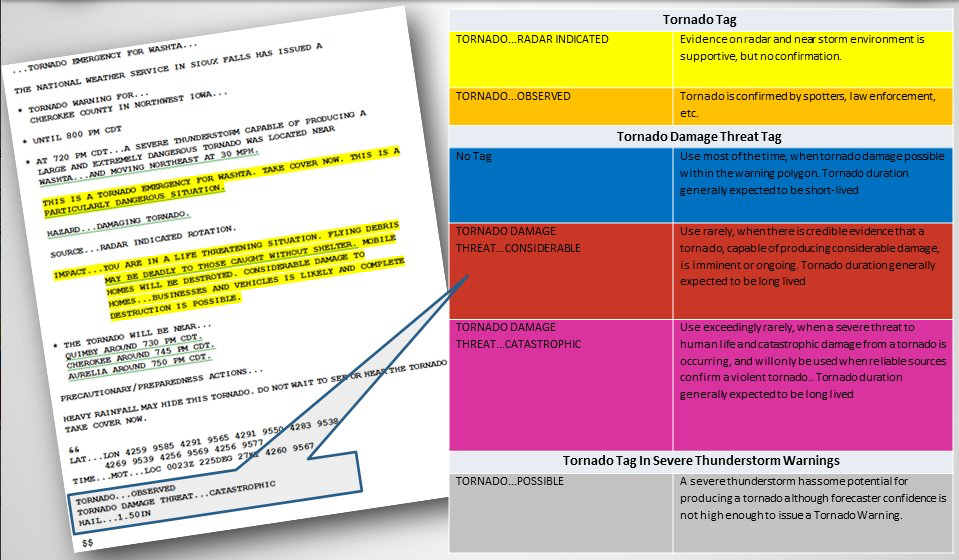
The above image is an example of the wording that could be used for a tornado warning issued by the National Weather Service. This particular warning was a PDS warning for a tornado heading towards a town in northwest Iowa. The yellow highlighted section indicates that it is a PDS warning and gives instructions to take cover. Some other tags may be used, such as whether the tornado has been observed or is indicated by radar, as well as how damaging the tornado wind threat is. In addition, the warning text includes approximate locations and times of where the tornado is expected to be during the warning.